
Dragon's Dogma Review
-
Category: ReviewsHits: 18046

Article Index
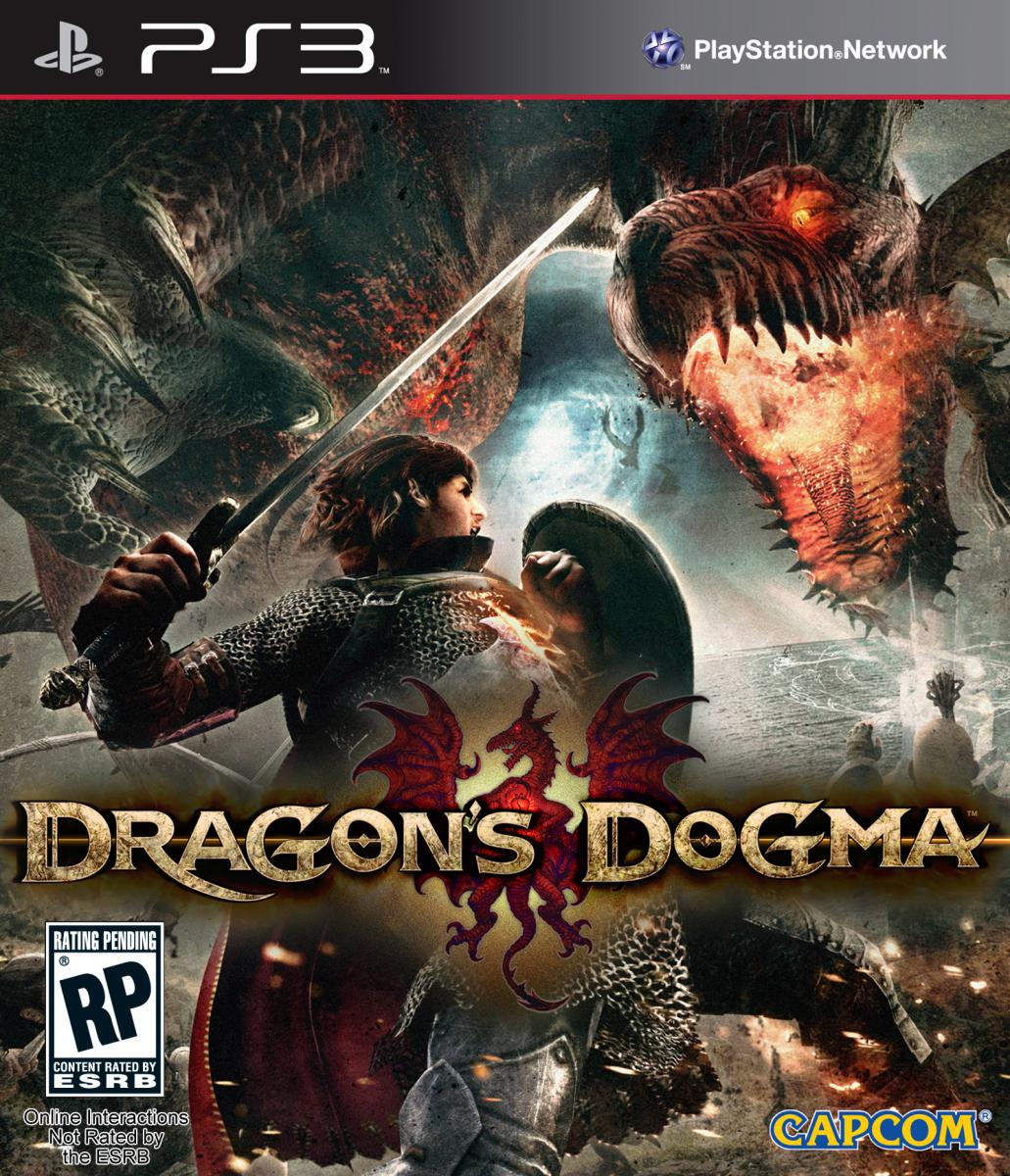
Dragon's Dogma is a console-exclusive fantasy open-world action-RPG produced by Capcom, or, in other words, their attempt to enter the same market of titles such as The Elder Scrolls, the late Fallouts, Kingdoms of Amalur: Reckoning, etc. That said, it would be unfair to single out Dragon's Dogma as a simple copy-cat, as the game offers plenty of twists on the formula, and, while taking cues from plenty of recent and less recent titles, also has its own, surprisingly well-defined, identity.
It's unfortunate that the game's design often comes off as schizophrenic and incoherent then, because Capcom's fantasy RPG actually had the potential to be great and even now might offer a fulfilling experience for many people.
Scripted Beginnings
In a fashion not unlike that of other recent titles such as Fallout 3, Skyrim and even Piranha Bytes' Risen 2: Dark Waters, Dragon's Dogma's opening is fairly linear and scripted, and serves as a way to familiarize with some of the title's basic mechanics. First you play as a pre-made character through a tutorial dungeon, then you actually get the chance to customize your own character's look, only to fight a losing battle with the titular's dragon, and finally get to choose your "vocation" (the title's class/job equivalent) minutes later.
Not even at that point you're still free to explore to your heart's content though, as the game's pawn mechanics and the rest of the map beyond the starting area only get unlocked after a few more story quests, and while this doesn't come off as particularly grating during your first playthrough, repeated playthroughs and New Game+ could have benefited from a quicker start.
This serves the purpose of setting up the premise of the title's story: you're a fisherman/woman in the village of Cassardis, which gets attacked by the titular dragon, and in your attempt to vanquish it you are defeated, and your heart is (literally) stolen. You discover you have command over the "pawn legion", a legion of mercenaries without feelings or desires, the "spark" that drives normal human beings. You're an Arisen, the last in a long series, destined to fight the dragon and vanquish it.
It's also worth noting that in between these story quests there are a few side quests you can undertake in the starting locations, and that advancing with the story will make you automatically fail them. I'm okay with the chance of failing quests, even thrilled by it, but in this case I can't help but feel like Capcom has done a bad job communicating their availability time frame to the players, and it's a problem that plagues not only the tutorial but all of the game.
The Draw of Adventure
It's outright counterproductive for Dragon's Dogma to take so much time to open up considering the title's strongest aspect is its sense of adventure and openness. The game features a well-designed, if rather small when compared to the competition, playable area, and many of the title's mechanics were clearly designed to support it, enticing the player to explore it while at the same time presenting a very real risk for traveling.
Where most modern titles try to offer the players an appropriate level of challenge all the time, Capcom went for a complete lack of level scaling: while the roads might be relatively safe, the wilderness area are full of all manners of monsters waiting to get their claws on you. Different zones of the map feature different types of monsters, so certain areas end up being a lot more difficult than others, and while there's a general difficulty progression in exploration, with the outer edges of the map being more difficult than its central hub, that's left for new players to discover, with almost no signposting. That said, fleeing from high-level monsters is always an option and NPCs constantly remind you to stick to the roads, so I never felt that the game was being particularly unfair in that respect.
In another move that defies most modern conventions but helps the core design, Dragon's Dogma's only fast travel system relies on fairly expensive magic items that are consumed after use, forcing you to travel to most locations by foot. While this helps keeping players on their toes at the beginning of the game, many quests require you to travel relatively long distances on a regular basis, which means you'll fight the same monsters and face the same challenges even when you're way past their level range, making them more of a nuisance than anything else. Putting some kind of a carriage system in the title could have prevented at least some of this tedious backtracking and would have greatly benefited the game.
Another factor that contributes to the exploration's risk-reward proposition is the day-night cycle: visibility is extremely low during the night, with your only light source often coming from your lantern (which needs to be replenished with oil to avoid dying out, though the developers have been fairly generous with its length), and undead and phantoms populate the roads adding a different dimension to the challenge in the same locations.
While not exactly on par with Ultima VII or even Skyrim, the world certainly feels alive: flowers, plants and fruits can be picked up from the ground, just as a good portion of the other rendered items, boulders fall in certain locations, bandits ambush you from appropriately advantageous places such as cliffs or walls, walking in bodies of water makes you wet and vulnerable to lightning-based attacks, travelers constantly walk along the roads, strong winds blow in certain locations, pushing you away or making you travel faster depending on what direction you're coming from, boss enemies can ambush you while you travel, etc.
The game's dungeons also merit a mention: while hardly perfect, they easily win against the competition's linear and short affairs, often spanning multiple levels, and including secret and secondary paths and chambers, puzzles and a good enemy variety (while it could be argued that it's not particularly appropriate for a cave to have a cockatrice reside in its depths, it certainly makes for a fun fight).
Overall, none of that is revolutionary or an achievement in itself, but compared to the other role-playing titles I've played in the last 5 years or so, Dragon's Dogma has some of the best dungeons, with the only downside being that there are very few of them.
That said, while it can be argued that traveling and exploring is Dragon's Dogma's biggest draw, it's hardly perfect. Sure, your characters are fairly agile and can easily climb and jump their way to most locations, but you can't really swim, and most bodies of water are limited to puddles or extremely shallow lakes: trying to get into deeper bodies of water will net you some slight damage and teleport you back location you were in before entering. Chests often hold only junk inside, due to the fact that the majority of them are random in content, and respawn on a regular basis, reducing the need to continuously search for new areas to explore.
The map's relative small size, and the plentiful use of natural barriers on part of the developers means you'll generally be walking the same path to go from A to B and vice versa, which also contributes in making the player feel tired during the end-game stages, with most quests eliciting only a "been there, done that" type of response.
Finally, the environments are pretty much all variations on the same generic medieval fantasy theme, and, while there is a certain charm to Dragon's Dogma's honest derivative art style, it's difficult to to muster much enthusiasm at the thought of visiting yet another forest or canyon to finish a quest.
Quest(s) for Glory
While Dragon's Dogma might excel at exploration and adventure, it utterly fails at providing interesting quests to the players, both as far as side and main quests are concerned. Capcom's designers were clearly inexperienced in the genre, and it shows: the vast majority of the quests are handed out through notice boards, and amount to fetching, killing or escort quests, with only a select few coming from proper quest givers and breaking the formula, often with disastrous results.
If those formulaic notice board quests might at least lead to interesting gameplay situations and make use of the game's core mechanics, the more elaborated ones that in Capcom's intentions were probably meant to offer a deeper experience often end up feeling convoluted, obscure and tedious.
For example, a side quest required me to convince a family to leave the land owned by a certain wealthy individual, which translated into having to follow a series of quest markers to find the members of this family and talk to them. This in turn lead to one of the children escaping and having to find him... with the help of a conspicuous quest marker. After reaching the boy on a roof and talking to him, I had to talk with another family member again, and then either pay the wealthy individual to buy the land and allow the family to stay there or give the family enough money to survive even after being cast away from the property.
I don't know if my standards are too high, but I don't consider that to be meaningful gameplay. Maybe it could have worked if the game had proper dialogue trees and dialogue skills, but the developers instead opted for a system reminiscent of Diablo-like action-RPGs, with an extremely limited amount of strictly practical options, which relegates players to an essentially passive role in most of the conversations.
Add to that, as I've already said, you can fail quests extremely easily simply by advancing the story, with little to no apparent logic behind it, and it's easy to see how Capcom's failings far outweigh their good ideas. Which is not to say that there aren't good ideas: a few of the quests are genuinely competent and present interesting scenarios, such as a rivalry between two rather different rival bandit gangs, and sometimes even choices and consequences. Admittedly, these choices and consequences are extremely minor and aren't always present where you would expect them but I was still pleasantly surprised by the few I encountered.
A little touch like seeing someone you fetched an item for earlier help you with that very same item, easily dispatching an otherwise formidable foe, goes a long way in making you momentary forget about the oddities and obscure logic of the title's quests. Unfortunately, though, that's the exception rather than the norm.
Combat and Pawns
Dragon's Dogma holds the strange distinction of combining a relatively free, open-world structure, an action-based combat system and a four-man party, and somehow not making the mix feel like a tremendously clunky and awkward affair. You get to outfit and customize both your main character (dubbed the "Arisen") and a "main pawn" in terms of appearance, skills and equipment. The main pawn is essentially a cohort that follows every order and helps in combat and quests, and ties into the larger mechanics concerning your party.
You also get the chance to hire two more "support pawns" at Rift Stones or during your travels, either by hiring other players' main pawns or one of the computer-generated ones, though their mechanics slightly differ from your main pawn: they don't level up, their skill selection and inclination (more on that later) can't be changed and any attempt to equip them with different items will have those items sent as gifts to their owner.
This effectively means you'll have to switch your support pawns often as you level up, and offers plenty of opportunities to experiment with different parties and tactics. While this need can be partially circumvented by hiring high-level pawns, it's worth noting that it requires an amount of rift crystals (a secondary form of currency used only for pawns) proportionate to the difference between their level and yours, making it a non-trivial prospect.
Whether you choose to go for a full-party or ignore the pawn system completely and go solo (a legitimate possibility the game offers and, in some case, even rewards) though, combat is essentially an action-based, fast-paced affair.
You and your pawns have three weapon skills available for both primary and secondary weapon respectively, with the exceptions of the Mage and Sorcerer vocations, that get to equip six skills to their magic staff, and the Warrior that only has one two-handed weapon with three skills at their disposal. Skills encompass a wide series of abilities, including crowd control functions, damage dealing, status ailments, buffs, dodging, and even a few non-combat abilities such as stealing from an enemy, and offer a good range of options for the various combat situations the game presents. Most of them consume stamina which, when finished, renders the character unable to perform any action for a small time frame.
Aside from those skills every vocation also gets a light and heavy attack that doesn't consume stamina, can grab certain items from the ground or from their inventory and throw them (for example, a bottle of oil makes enemies more vulnerable to fire), hold enemies down for other pawns to attack, and scale big ones such as cyclops to attack their weak points. Mix all these elements together and it's easy to see how the combat might get rather chaotic and confusing, but Capcom has done a remarkable job in making it feel approachable and intuitive most of the time, with only a few problems coming from the awkward handling of the camera in small spaces and when you scale monsters, and that's largely thanks to the well-done AI of the pawns.
Pawns prioritize actions based on their "inclination", which might mutate based on the orders you give them during battle, and can also be changed with the use of a certain potion or special "Knowledge Chairs" placed at inns and rest camps. For some reason Capcom decided to obscure what the various inclinations do by offering unclear description, and made it needlessly complicated to change your main pawn's inclination, which can lead to frustrating situations, such as a pawn grabbing the corpse of a fellow unconscious pawn and brining it next to you instead of attacking an enemy's weak spot. A simple menu-driven system such as Dragon Age: Origins' tactics would have probably served the game just as well, without being needlessly convoluted.
Overall, despite a few stumbles here and there, the game strikes a nice balance between action, fast-paced combat and party-building, which makes for some rather interesting battles. Those who love to be in control all the times won't like the chaos that can ensue from Dragon's Dogma busiest encounters, but there's an undeniable sense of satisfaction in felling a drake after a long, arduous battle.
Character Development and Loot
In keeping with the title's philosophy of letting you experiment with character building and party formations, Dragon's Dogma's character system is a fairly forgiving one, featuring very few permanent choices. While at the beginning of the game you're asked to select a vocation, by no means that means you have to keep leveling up with it for the rest of the game, and doing so might even be counterproductive.
The game rewards experience and discipline points when you slay monsters or complete quests. The first are fairly self-explanatory, while the second are the currency that is used both to acquire new skills and change to a vocation for the first time. Both of these actions are only available at inns or rest places, and switching to a vocation you've already used is effectively free, making the use of discipline points close to the notion of "buying" a vocation.
There are three base vocations, which can be selected from the beginning, while the three advanced vocations and three hybrid vocations are available later, for a total of nine, although only the Arisen can use them all nine, with the pawns limited to only the base and advanced ones. Every vocation can use two or more weapon types (only a primary type weapon and a secondary type weapon can be equipped at the same time) and has its own list of weapon skills, core skills and augments.
Weapon skills are the skills tied to weapon types I mentioned before, and have to be manually assigned to the respective slots at an inn or a rest place. Core skills don't consume stamina and don't need to be equipped, but instead enhance your basic moveset with a certain weapon type and are usable at all times as long as you're currently equipping that item. Finally, augments are vaguely similar to Dungeons & Dragons talents, permanent passive enhancements that aren't tied to a single vocation or weapon after being bought, and improve all manners of characteristics such as your agility, health, stamina, and can also offer passive benefits to your pawns. There are only six total slots for augments, meaning that you have to make a choice on what to use based on your vocation and playstyle, and just as your other skills and your vocation, they can be switched freely at an inn or rest place.
The only permanent aspects in character building then are the order you choose to buy vocations and skills, and the way your stats progress, which is influenced by the vocation you're using at the time you level up. Overall, though, the impact isn't particularly dramatic, and since the level cap is extremely high (200) there just isn't much of a reason to min-max a character.
As far as loot is concerned, there isn't a lot of variety in weapon types, since very few vocations can use more than two, and some overlap between them. The progression isn't terribly exciting either: with the exception of a few items with permanent enchants and jewelry, weapons and armors sometimes favor physical attack/defenses over magic, or, in the case of armors, have negligible elemental bonuses/maluses, but overall the progression is a fairly linear one. That said, every item has its own carefully crafted appearances and can be improved four times (the first three by paying money and consuming ingredients at a blacksmith, the fourth by defeating a dragon-type opponent while wearing the item) which increases the item's statistics and reduces its weight, and acquiring more powerful loot is not only necessary, but also satisfying.
Difficulty and Replayability
The game more or less features a reverse difficulty curve, with the beginning being by far more difficult than the end stages, similar to titles such as The Witcher 2 and Gothic. That said, compared to those titles, Dragon's Dogma's difficulty curve is much gentler, with the game getting easier far quicker.
In other words, the game gets easy rather fast, and with the exception of a few boss creatures or disadvantageous situations, a high-level character with a well-balanced party should have no problems rolling over pretty much every encounter the game presents. Players who really love a challenge might self-gimp by not using any pawn and the augments connected to solo play, although it doesn't really seem to be a possibility the game was balanced around.
It doesn't help that the game's New Game+ doesn't increase the difficulty in any way, instead opting to make minimal changes to the world, making it trivially easy for a character that already finished the title to overcome the same challenges they already faced once.
Speaking of New Game+, it's worth noting that the game offers both that and a post-game section (though it could also arguably be considered end-game, I guess) that adds dramatically more powerful enemies to the world, a whole new dungeon to explore (obligatory, if one wants to get to the true ending of the title and get to New Game+), and comes with an asynchronous multiplayer event that grants high-level loot to all of the participants and is particularly handy to those that wish to enhance their weapons and armor to the highest level, "Dragon Forged".
Aside from the draw of more powerful loot and the desire to complete a few missed quests and get the better possible outcomes out of everything, there really isn't much of a reason to replay Dragon's Dogma, especially considered that there is only one "true ending", and every other ending essentially amounts to a game over preceded by a cutscene.
Terrible, Terrible, Terrible Storytelling
So far, I've been focusing my attention on the title's gameplay and haven't really touched upon its writing. One of the reasons is that Dragon's Dogma is a title that obviously focuses a lot more on the gameplay experience rather than on a linear or branching storyline. But there's another important reason: the story is simply terrible.
With the exception of a few surprisingly decently-written characters (Mercedes, a warrior sent from another country to help with the dragon hunt comes to mind) and a few good ideas (chief among them the ending, which is actually extremely interesting in the way it manages to tie mechanics and story) Dragon's Dogma features storytelling that commits all kinds of sins: it's disjointed, badly paced, too reliant on cutscenes and, at times, just feels plain confused. If that wasn't enough, it's also coupled with a remarkably generic setting, with barely any hint of personality. Add to that some truly ridiculous ren-faire language, and it's easy to see why I say the storytelling is terrible.
Graphics, Soundtrack and Technical Issues
I can't speak for the Xbox 360 version of Dragon's Dogma (from what I gather it presents different technical issues) since I didn't get the chance to play it, but on the PlayStation 3 the titles is rife with small issues such as an unstable framerate, stuttering sound, fairly noticeable pop-in and some pretty poor lip-syncing. While none of that is gamebreaking in itself, together they all hurt the experience.
Furthermore, it doesn't help that the game just doesn't look particularly good: besides some nice lighting the visuals are fairly unremarkable, with muddy textures, low poly environments and the worst color banding I've seen in a game in quite a while.
Speaking of a lack of originality, the soundtrack, with the exception of a rather unfitting J-Rock opening theme, is fairly standard and not particularly notable. It's listenable and it occasionally even does a good job accompanying your triumphs against the game's largest foes but I can't think of any tune I'd like to listen again now that I'm done with the title.
Conclusions
I feel it's a testament to Dragon's Dogma's strengths that, despite the fact that I value quest design, multiple solutions, and meaningful non-combat gameplay very highly in role-playing games, I still enjoyed my time with the title a lot. Ultimately, Dragon's Dogma is a title that does almost as much wrong as it does right, but as long as one appreciates what it does well, it's an extremely satisfying experience. While Capcom might have had problems writing a narrative worth its salt or decent quests, it crafted a world deserving to be explored and experienced, with plenty of fun moments to offer, and offered a genuinely interesting and deep action combat system to the players. If that sounds appealing to you, it's certainly well worth a try.